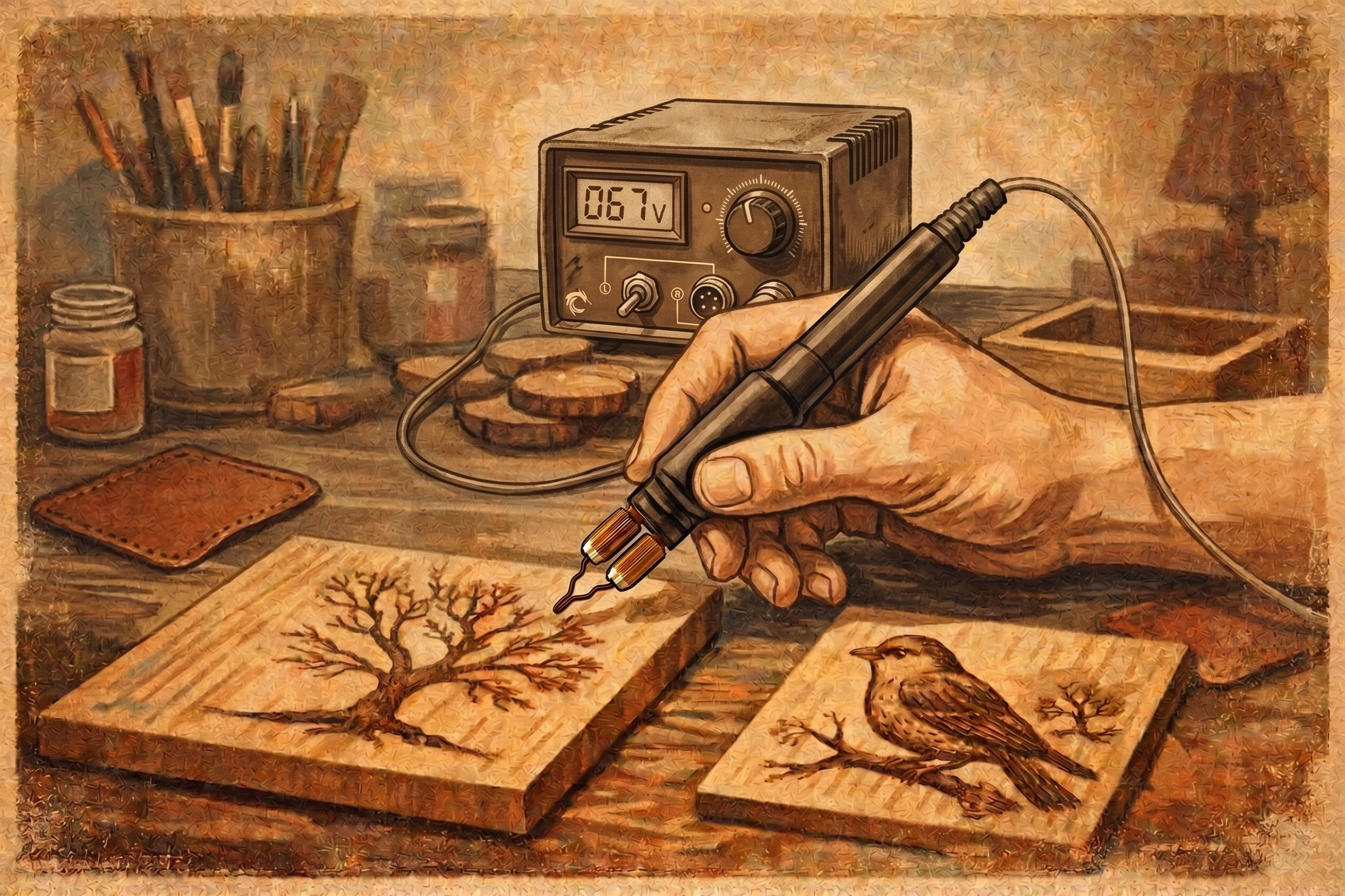
A dual pen wood burning machine changes the rhythm of a serious pyrography project. Instead of stopping to cool one pen, swap a tip, adjust heat, and test the next mark, you can keep two purpose-built pens ready for the work in front of you. One can handle a broad background texture while the other stays fitted for fine fur, lettering, or precise contour lines.
For makers moving beyond simple beginner projects, that is more than a convenience. It supports cleaner transitions, more consistent burn quality, and a workflow that feels closer to drawing with a well-organized set of tools. The right setup will not replace practice, but it can remove many of the interruptions that slow down detailed work.
What a Dual Pen Wood Burning Machine Does Differently
A dual-pen system powers two handpieces from one control unit. Both pens remain connected, so you can move from one tool to the other without disconnecting a cord or changing a hot tip mid-project. With a professional detailer, the control unit typically provides digital temperature control, allowing you to set heat based on the material, the tip shape, and the effect you want to create.
This matters because different marks ask for different tools. A shader can cover an area with soft, even tone, while a fine writing tip creates crisp details. A spear-shaped tip can establish a clean edge, and a ball tip can build small, controlled marks. When two pens are ready at once, you can assign each one a job instead of repeatedly reconfiguring a single pen.
Think of it as setting up two brushes before painting. The benefit is not that you must use both at every moment. The benefit is that your preferred tools are ready when the design calls for them.
A dual-pen machine is especially useful for long projects with frequent shifts between linework and shading. Portraits, wildlife scenes, layered landscapes, detailed signs, and custom leatherwork often involve those shifts. If your work is mostly simple outlines or occasional gift tags, a single-pen tool may still be the more practical fit.
Where Two Pens Save Time
The most obvious advantage is less downtime. Tip changes are part of pyrography, but they interrupt your momentum. Even when a tip is easy to change, you need to pause, let the pen cool as needed, select the next tip, secure it, bring the pen back to temperature, and make a few test marks before returning to the artwork.
With two pens, a common arrangement is to keep a detail tip in one handpiece and a shader in the other. You can establish outlines, switch to shading, then return to details while the values and texture choices are still fresh in your mind. That is helpful when creating natural textures such as feathers, hair, bark, or delicate floral petals.
The second advantage is consistency. A pen fitted with a fine tip can stay at the heat level that produces your preferred line weight. Your shading pen can be set for the slower, softer pass you need for gradients. You are not constantly resetting one tool to serve two very different roles.
There is a trade-off. A dual-pen setup adds cost and takes more bench space than a basic beginner kit. It also asks you to be more deliberate about organization. Each hot handpiece belongs in a proper metal or ceramic pen stand when it is not in use, and each selected tip should have a clear purpose. For an artist who works regularly, that extra structure becomes part of an efficient routine. For a casual maker, it may be more capability than necessary.
Digital Temperature Control Is the Real Working Advantage
Two connected pens are valuable, but temperature control is what gives a professional machine its range. Heat affects how quickly a mark develops, how dark it appears, and how easily you can repeat it across a project. Digital control gives you a dependable starting point rather than forcing you to work from guesswork alone.
No temperature number is universally correct. Wood species, grain direction, surface density, moisture, and tip selection all affect the burn. Leather responds differently than wood, too. The smart approach is to make a few test marks on a scrap of the same material before touching the final piece.
Once you find a setting that gives you the line or shade you want, digital control makes it easier to return to it. That is particularly valuable for commission work and repeat designs, where a consistent look matters. It also encourages better technique: use a controlled pace and light pressure rather than relying on excessive heat to force a dark mark.
For refined shading, lower-to-moderate heat with patient, overlapping passes often gives more control than one aggressive pass. For fine details, enough heat to create a clean mark without dragging helps preserve sharpness. The exact result depends on your material and tip, which is why a test board is one of the most useful accessories on any worktable.
Choosing Tips for a Two-Pen Workflow
A dual-pen machine becomes more useful as your tip selection becomes more intentional. You do not need every tip shape at once. You need a few dependable options that match the marks you make most often.
For example, one handpiece might carry a fine detail tip for outlines, small lettering, whiskers, veins, and edge cleanup. The second can hold a shader for backgrounds, larger lettering fills, gradients, and smooth tonal work. That pair covers a surprising amount of artwork.
As your style develops, you may prefer a different combination. A texture-focused artist might keep a spear or spoon-style tip ready beside a fine point. A sign maker may pair a writing tip with a broader tip for filling letters. Someone working on small ornaments may use two detail-oriented tips at different heat settings to move between delicate lines and deeper accents.
Premium detailing tips are worth considering when precision is central to your work. Their value is not simply variety. A well-chosen tip gives you a more predictable mark, which makes it easier to build muscle memory. Over time, you begin to recognize how a particular tip behaves on a favorite wood surface and can design around its strengths.
Who Should Consider a Dual-Pen Setup?
A dual-pen system is a natural next step for makers who already enjoy pyrography and want fewer tool-change interruptions. It is well suited to artists creating detailed wall art, personalized keepsakes, custom signs, ornaments, leather projects, and pieces with extensive shading or texture.
It also makes sense for makers who have outgrown a fixed-temperature craft pen. If you are beginning to notice that certain lines burn too quickly while other areas need more gradual control, adjustable heat can make a meaningful difference. The goal is not to make the tool more complicated. It is to give you better control over your decisions.
For first-time woodburners, a Stage 1-style kit can be a more comfortable place to start. It gives you the chance to learn the basics of tip handling, line control, shading pressure, and material response without investing immediately in a professional workstation. A dual-pen detailer is best when you know you will use its speed, precision, and flexibility.
Before choosing, consider how often you burn, the size and detail level of your typical projects, and whether you regularly switch between techniques. If you spend most sessions wishing your current pen could stay set up while you use another tip, you have already identified the problem a dual-pen machine solves.
Set Up for Better Results From the First Project
A capable tool performs best in a focused workspace. Keep your project supported on a stable surface, place each handpiece in its dedicated stand when you pause, and arrange your tips so you can identify them quickly. Good lighting helps you read tone and grain direction before a line becomes permanent.
Start each session with a small test area. Use it to check your heat setting, practice the stroke you need, and confirm how the selected tip responds. This is a fast habit that prevents avoidable surprises on finished work.
It also helps to plan pen assignments before you begin. Decide which pen will handle your primary linework and which will handle shading or texture. You can always change the plan, but starting with clear roles keeps the dual setup from becoming cluttered.
A dual-pen wood burning machine earns its place when it helps you stay present with the artwork instead of stopping to manage the tool. Choose the tips you reach for most, test your marks with intention, and let the second pen keep your creative momentum moving.